


A Sort Of Life
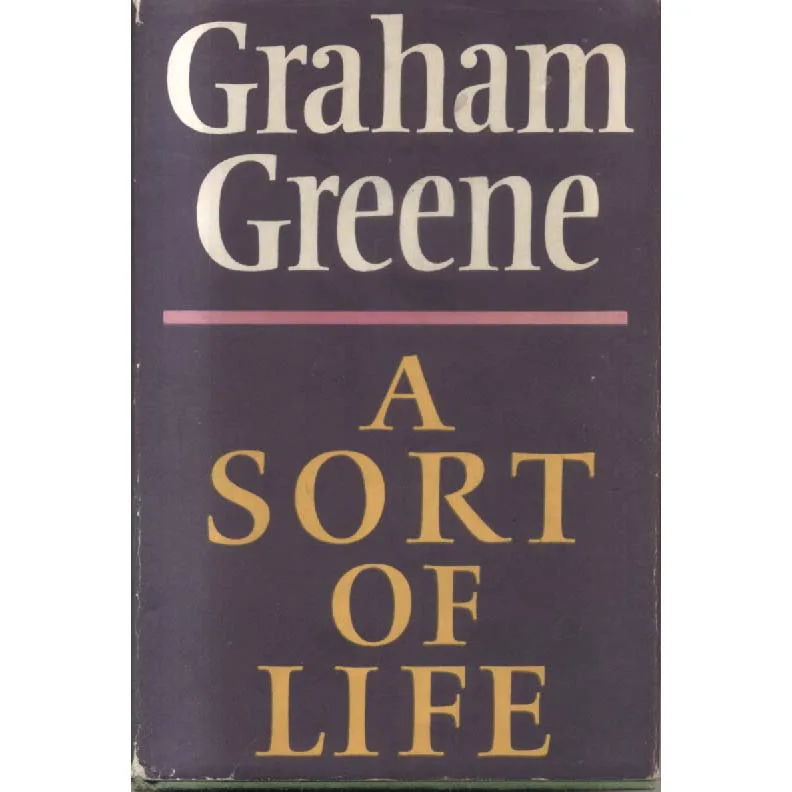
Publisher: Book Club Associates
Format: Hardback
ISBN: none
A Sort of Life (1972) by Graham Greene
Book Club Associates
ISBN: None
Condition: Good
Graham Greene called this book A Sort of Life, which is an admirably modest title for an autobiography and considerably less alarming than Here Is Everything I Have Ever Thought About Myself.
Published in 1971 and appearing here in this 1972 Book Club Associates edition, A Sort of Life covers Greene’s early years: childhood, school, Oxford, journalism, psychoanalysis, conversion to Catholicism, marriage and the beginnings of the literary career that would eventually make him one of the most recognisable British novelists of the twentieth century.
It is autobiography, but unmistakably Greene autobiography.
That means no relentless triumphalism, no heroic polishing of the family silver, and very little sense that the author is campaigning to be remembered as an uncomplicated national treasure.
Greene is far more interested in unease.
His childhood in Berkhamsted, where his father was headmaster of the school he attended, left him caught awkwardly between authority and rebellion. School life was not merely unpleasant; it was formative in the way that only prolonged misery can be when it eventually produces a successful novelist.
Greene later underwent psychoanalysis as a teenager, an unusual experience at the time and one that clearly fed his lifelong fascination with divided loyalties, guilt, fear and the inconvenient workings of the mind.
All of which is excellent preparation for becoming Graham Greene.
The book follows him through Oxford, youthful political enthusiasms, early jobs and journalism before arriving at the difficult business of becoming a published writer.
There is something reassuring in discovering that even Graham Greene did not simply sit down one morning, write The Power and the Glory, and have everyone immediately agree that literature had been successfully completed.
There were false starts, rejected work, uncertainty and the usual mixture of persistence and bad judgement required by almost any creative career.
Greene writes about these things with characteristic restraint. He is reflective without becoming sentimental and candid without turning the book into a public confession booth.
That distinction matters because Greene’s fiction is so often concerned with moral failure, divided identity and people behaving badly while still somehow remaining recognisably human.
A Sort of Life gives the reader some sense of where that territory came from.
His conversion to Roman Catholicism is an important part of the story, though characteristically it is not presented as a tidy transformation in which all doubts disappear beneath a shaft of heavenly light.
Greene was much too Greene for that.
Faith, in his world, tends to arrive accompanied by uncertainty, moral complication and people making decisions they later regret.
The memoir also provides a glimpse of the literary world before authors were expected to maintain personal brands, publish photographs of their writing desks and announce the progress of every chapter online.
Greene wrote, travelled, worked in journalism and gradually established himself through books that people actually had to discover without being reminded of them three times a day.
Primitive times.
There is also plenty here for readers interested in Greene’s novels because so many of the preoccupations that later dominate his fiction are already visible in the life: betrayal, secrecy, Catholicism, danger, divided loyalties and the strange attraction of places where sensible people have decided not to go.
Yet this is not a book that insists every childhood incident was obviously preparing the author for greatness.
That is part of its appeal.
Greene frequently seems more interested in uncertainty than destiny.
The title itself suggests as much. This is not presented as The Life, definitive and monumental, but merely A Sort of Life: partial, subjective and necessarily incomplete.
Which is probably a more accurate title for almost any autobiography ever written.
For readers of Graham Greene, twentieth-century literature, literary memoir and British cultural history, this is a fascinating companion to the novels and a revealing account of the years in which Greene became Greene.
This Book Club Associates edition from 1972 is in Good condition, which seems fitting for a memoir by a man whose fictional characters were rarely afforded anything quite so reassuring.
Available from Crappy Old Books, where every book has had a sort of life before arriving here, and some of them are prepared to talk about it.
Keep browsing: See more Fiction books Other books by Graham Greene
